
This guide was synthesized using the latest legislative data and verified by our editorial board. Laws are subject to change; always consult official sources for final confirmation.
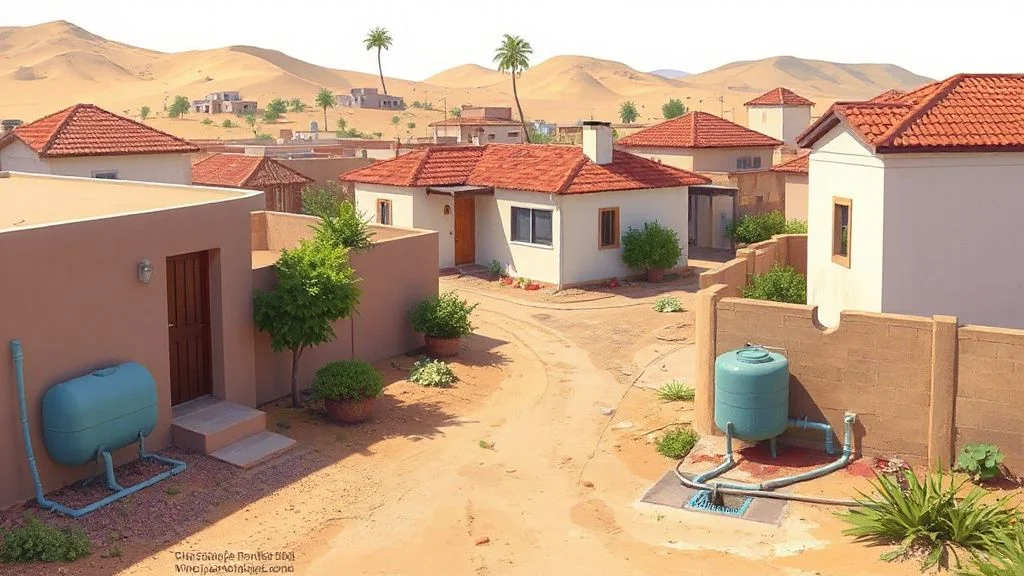
Articles about septic tanks fill up with numbers very quickly: a tank volume, a distance from the nearest well, an emptying interval, a price per tanker load. This one has none of them, and that is a decision rather than an omission. Saudi Arabia has a dedicated national code for exactly this subject. We could confirm that the code exists, name it and date the register that governs its inspection — and we could not read its text. So below you will find what is established, who decides, and the six inputs any real calculation rests on, instead of four numbers nobody could check.
There is a Saudi code for precisely this, and it is not the plumbing code
The Saudi Building Code is a family of volumes, not one book, and private wastewater has its own. The official register of inspection bodies published by the Saudi Standards, Metrology and Quality Organization — titled Accepted Conformity Assessment Bodies for Inspection Activities in Saudi Building Code and carrying last update 6 September 2026 — lists the volumes that accredited bodies may inspect against. Two of them matter here:
- Saudi Sanitary Code (SBC 701) — the plumbing and sanitary volume, covering sanitary drainage and storm drainage inside and around the building.
- Private Sewage Disposal Code (SBC 702) — a separate volume for private sewage disposal, which is where a septic tank on a plot without a public sewer belongs.
The same register lists the rest of the family alongside them: Saudi Building Code — General (SBC 201), Saudi Construction Code (SBC 302), Saudi Electrical Code (SBC 401), Saudi Mechanical Code (SBC 501), Saudi Fire Code (SBC 801), Existing Building Code (SBC 901), the Saudi Residential Building Code (SBC 1101 and SBC 1102) and the Saudi Fuel Gas Code (SBC 1201). If a contractor tells you a septic installation is governed by the plumbing code, the register says the relevant volume is the private sewage one.
Why this article gives no tank size, no setback and no emptying interval
Because we could not read the volume that sets them, and a technical requirement quoted from memory is worse than no requirement at all.
What we tried on 24 October 2026: the code centre's own site at sbc.gov.sa answers, but neither its English landing page nor its building code section publishes a list of volumes or an openly downloadable text, and the site puts its material behind a sign-in. The only complete copies of SBC 701 and SBC 702 we located sit on third-party document-sharing sites under the code committee's reserved copyright. A commercial study companion to the 2018 edition of SBC 702 is sold by a standards publisher, described as covering provisions for design, installation, and inspection of private sewage disposal systems — which tells us the edition year and the scope, and nothing about any individual requirement.
So: there is a published Saudi requirement for tank sizing, siting and maintenance, and we are not the ones who can quote it to you. Ask the accredited inspection body or the engineering office handling your permit to show you the clause, by number, from the edition in force.
The six inputs a real calculation rests on
If somebody is sizing a tank or a soakaway for a house you are about to live in, these are the inputs the work depends on. If any of them is missing, the number coming out is a guess no matter how confidently it is presented:
- Design occupancy. The number of people the house is designed for, which codes usually derive from bedrooms rather than from who happens to live there now.
- Daily wastewater volume per person. The design flow figure the code prescribes, which also decides whether a greywater line is counted in.
- Required retention time in the tank. How long the design requires the liquid to stay put for solids to settle; this is what converts a daily flow into a tank volume.
- The soil's infiltration rate, from a percolation test on the actual plot. Sand and hardpan at the same address behave nothing alike, and this single measurement drives the size of the disposal field.
- Depth to groundwater, and the distance to every well, cistern or water line on and beside the plot. This is the public-health constraint and the one with the least room for improvisation.
- Whether a public sewer is available at the plot boundary. If it is, a private system is usually not the lawful option at all, and the question becomes a connection rather than a tank.
Ask for all six in writing, with the percolation test attached. That request is also a good test of the contractor.
Who decides, and in what order
Four bodies sit between you and a lawful private sewage system, and they do not do each other's jobs:
- The Saudi Building Code Center publishes the code itself. It is the only place that can tell you what the current edition of SBC 702 requires.
- The municipality, through the Balady platform, issues the permits. Balady's published catalogue includes Issuing a Building Permit and Adding and Modifying Building Components, the second of which is the route for changing components of an existing permit and is published as a paid, non-instant service.
- An accredited conformity assessment body inspects against the code. Which bodies may do that, and for which volumes, is exactly what the standards organization's register of 6 September 2026 lists — so you can check that the firm proposed to you appears on it for SBC 702.
- The National Water Company is the party for a sewer connection and for tanker emptying where that service is offered. Its site and its customer portal both returned HTTP 403 to us on 24 October 2026, in English and in Arabic, so we cannot quote its published procedure and we are not going to summarize somebody else's description of it.
Our own reference data has nothing to offer here, and we checked
This article could have been padded with an approved figure that looked related, and that is worth describing because it is how bad numbers get into good articles.
Our approved reference palette for Saudi Arabia holds 53 values. We queried it for utilities, water, sewage, construction and building. The result: no water value and no building value exists — not one, under any of those keys. The single key in which the word water appears at all is a pharmacy shelf: the median price of an item on a shelf of waterproof plasters, SAR 17.50 across 20 items in stock, read on 7 October 2026. That is a price for a dressing, not for a tank, and matching it to this article because of one shared word would have been the kind of error we are trying to stop. It stays where it is.
What a tenant should ask before signing
None of this requires you to become an engineer. It requires five questions, and all five have documentary answers:
- Is the property connected to a public sewer, or does it rely on a private system? Ask for it in the lease, not over the phone.
- If it is private: who pays for emptying, the owner or the tenant, and is that written into the lease?
- Who is the licensed operator currently used, and can the landlord show the last service record?
- Is there a maintenance log, and does it show the dates of the last interventions?
- Was the system inspected against the private sewage volume of the code, and by which accredited body?
Also, two things to notice yourself rather than ask about: standing water or soft ground over the disposal area after use, and whether any well, cistern or irrigation point sits close to the system. Both are reasons to get the documents before you commit, not after.
What expats should know
- The governing volume is the Private Sewage Disposal Code (SBC 702), separate from the Saudi Sanitary Code (SBC 701).
- We could not read or date the code text, so this article carries no tank volume, no setback distance, no emptying frequency and no price.
- The 2018 edition of SBC 702 is the one we could evidence by name; confirm the edition in force before relying on any clause.
- Treat any specific tank size or pumping interval you are told as unsourced until someone shows you the clause number.
- Demand the six inputs, including a percolation test on the actual plot.
- Check your inspector against the standards organization's register, last updated 6 September 2026, for the SBC 702 scope.
- Permits run through the municipality's platform, including modifications to an existing permit.
- The water provider's pages were unreachable to us, so its connection and emptying procedures are a gap in this article and not a summary.
- Put responsibility for emptying in the lease. It is the one term that reliably turns into an argument later.
Where to check
The code volumes and their inspection scopes are named in the standards organization's register of accepted conformity assessment bodies for the Saudi Building Code, last update 6 September 2026. The code itself is published by the Saudi Building Code Center, whose material sits behind a sign-in; the edition year for the private sewage volume is evidenced by the publisher's study companion to the 2018 SBC 702, which is a commercial guide and not the code. Permits are on Balady. All read on 24 October 2026, the date on which the water provider's own pages returned HTTP 403.
AI-Generated Content: This article was created with AI assistance and may contain inaccuracies. Please verify important information with official sources.
Primary Sources
Last updated: October 2026