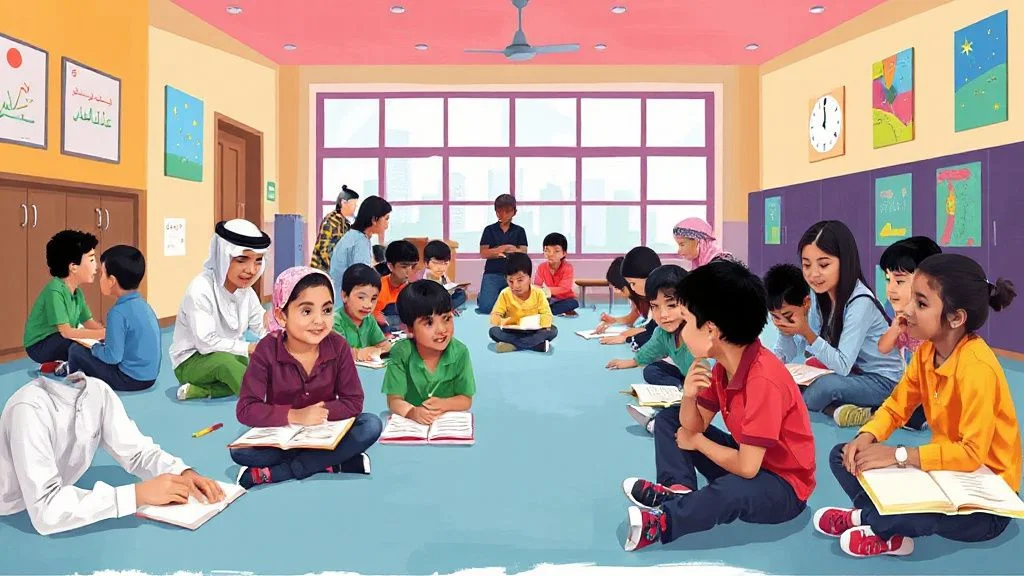
Riyadh, the capital city of Saudi Arabia, is home to a growing number of international schools catering to expatriate families. These institutions offer a diverse curriculum, often based on American, British, or other international educational standards. For expatriates seeking employment at these schools, understanding the qualifications, legal requirements, and cultural nuances is essential. This article will provide a detailed overview of who may work at an international school in Riyadh, including necessary qualifications, legal considerations, and practical advice for prospective teachers.
What can we help you with?
Three short questions, then just how to reach you. No account needed.
Qualifications Required for Teaching Roles
To work at an international school in Riyadh, candidates typically need to meet specific educational and professional qualifications. The requirements can vary depending on the school’s curriculum and the position being applied for.
Educational Background
Most international schools in Riyadh require teachers to hold at least a bachelor’s degree in education or a related field. For example, a candidate applying for a teaching position in a British curriculum school may need a degree in education or a subject-specific degree along with a teaching qualification such as a PGCE (Postgraduate Certificate in Education). Similarly, American curriculum schools often prefer candidates with a degree in education or a subject area relevant to the position.
In addition to formal education, many schools also value professional development and ongoing training. Candidates with additional certifications, such as TEFL (Teaching English as a Foreign Language) or CELTA (Certificate in English Language Teaching to Adults), may have an advantage, especially for positions teaching English as a second language.
Experience Requirements
Experience is another critical factor in securing a teaching position at an international school in Riyadh. Most schools prefer candidates with a minimum of two to three years of teaching experience, particularly in international or private school settings. This experience should ideally be in the same curriculum that the school follows. For instance, if a school follows the American curriculum, candidates with experience teaching in U.S. schools or international schools that implement similar standards will be favored.
Some schools may also consider candidates with less experience if they demonstrate exceptional skills or potential during the interview process. Therefore, it is beneficial for applicants to highlight any relevant teaching experience, including internships or volunteer work, in their applications.
Legal Requirements for Expatriate Teachers
Before the paperwork, three rules decide whether a particular person can lawfully hold a particular teaching post, and none of them is about qualifications.
First, THE PROFESSION ON YOUR WORK PERMIT MUST MATCH THE JOB YOU ACTUALLY DO. The Ministry of Human Resources and Social Development states that an employer may not employ a worker in a profession other than the one stated in the work permit, and that a worker may not take up work outside that profession until it has been officially changed. It is blunt about the consequence: working in an irregular profession is a violation FOR BOTH THE EMPLOYER AND THE WORKER. So if a school offers you a teaching role but registers you under some other occupation, you are not merely accommodating an administrative quirk, you are in breach yourself and exposed to the prescribed penalties. Ask what profession your permit will say, and check it when the iqama arrives.
Second, some occupations are closed to non-Saudis outright. The Ministry's guide to issuing work permits states that fully Saudized occupations cannot have a work permit issued, so no degree or experience will open one. Before accepting an offer, establish that the specific role you are being hired into can lawfully be filled by a non-Saudi.
Third, your permit depends on your employer's own compliance standing. A work permit cannot be issued or renewed where the establishment's Nitaqat level has been red for eight consecutive weeks. That is a reason to look at the school as an employer and not only at the salary, because your ability to stay lawfully in the country can be blocked by its position rather than by anything you have done.
One more thing to read in the offer itself: the contract of a non-Saudi worker must be in writing and for a fixed term. If it does not state a duration it is deemed to run for one year from the day work began, renewing automatically for a similar period if both sides carry on afterwards. And note the probation terms: the Labour Law allows up to 90 days, extendable to 180 only by written agreement, and during probation either party may end the contract with no compensation and no end-of-service award.
Work Visa and Iqama
On the mechanics, the school sponsors the work visa: it starts with the offer letter, and once the visa is granted you enter the Kingdom and the iqama follows. The part worth insisting on is who pays. Under Article 40 of the Labour Law the EMPLOYER bears the fees for recruiting a non-Saudi worker, the fees for issuing and renewing the iqama and the work permit, any fines resulting from delay in doing so, the fees for a change of profession, exit and re-entry visas, and the return ticket home at the end of the relationship. A school that asks you to fund your own iqama or to carry a late-renewal penalty is acting against the Law, and that is worth raising before you pay rather than afterwards. The only cost the article places on the worker is returning home if you are unfit for work or choose to leave without a legitimate reason.
The iqama application process requires several documents, including a medical report, a copy of the employment contract, and proof of educational qualifications. It is essential to ensure that all documents are translated into Arabic and notarized, as required by Saudi regulations. The iqama must be renewed annually, and it is crucial to maintain valid residency status to avoid legal complications.
Compliance with Local Laws
In addition to obtaining the necessary visas and permits, expatriate teachers must comply with local laws and regulations. This includes understanding the cultural norms and expectations in Saudi Arabia. For instance, during Ramadan, working hours are shortened, and public displays of eating or drinking during daylight hours are prohibited. Teachers should also be aware of the dress code and behavior expected in educational settings, which may differ significantly from their home countries.
Types of Roles Available at International Schools
International schools in Riyadh offer a variety of teaching roles, catering to different age groups and subjects. Understanding the types of positions available can help candidates tailor their applications effectively.
Elementary School Teachers
Elementary school teachers are responsible for teaching foundational subjects such as mathematics, science, and language arts to young learners. These positions typically require a degree in elementary education and experience working with children in a classroom setting. Teachers in this role must be adept at creating engaging lesson plans and fostering a positive learning environment.
Middle and High School Teachers
Middle and high school teachers often specialize in specific subjects, such as mathematics, science, or humanities. These roles may require additional qualifications, such as subject-specific degrees or teaching certifications. For example, a high school chemistry teacher may need a degree in chemistry along with a teaching credential. Experience teaching in a secondary school setting is usually preferred, as these teachers must manage more complex subject matter and prepare students for examinations.
Special Education Teachers
Special education teachers are essential in supporting students with diverse learning needs. These roles require specialized training in special education practices and often involve working closely with students, parents, and other educators to develop individualized education plans (IEPs). Candidates for these positions should have a background in special education and experience working with students with disabilities.
Practical Tips for Expat Teachers
For expatriates considering teaching in Riyadh, several practical tips can help streamline the application process and enhance their experience in the city.
Networking and Job Search
Networking is a powerful tool for finding teaching positions in Riyadh. Joining online forums and social media groups dedicated to expatriates in Saudi Arabia can provide valuable insights and job leads. Additionally, attending job fairs and educational conferences can help candidates connect with school representatives and learn more about available opportunities.
Job search websites specifically catering to international schools, such as Teacher Horizons and Jooble, can also be useful resources for finding vacancies. Regularly checking these platforms and applying promptly can increase the chances of securing a position.
Preparing for Interviews
Preparing for interviews at international schools requires understanding the school’s mission, values, and curriculum. Candidates should be ready to discuss their teaching philosophy, classroom management strategies, and how they plan to contribute to the school community. Practicing common interview questions and preparing a portfolio showcasing previous work can help candidates present themselves effectively.
Conclusion
Working at an international school in Riyadh offers expatriates a unique opportunity to engage with diverse cultures and contribute to the education of students from various backgrounds. By understanding the qualifications, legal requirements, and types of roles available, prospective teachers can navigate the application process more effectively. Networking and thorough preparation for interviews can further enhance their chances of success. With the right qualifications and a commitment to education, expatriates can find fulfilling teaching roles in Riyadh’s vibrant international school community.